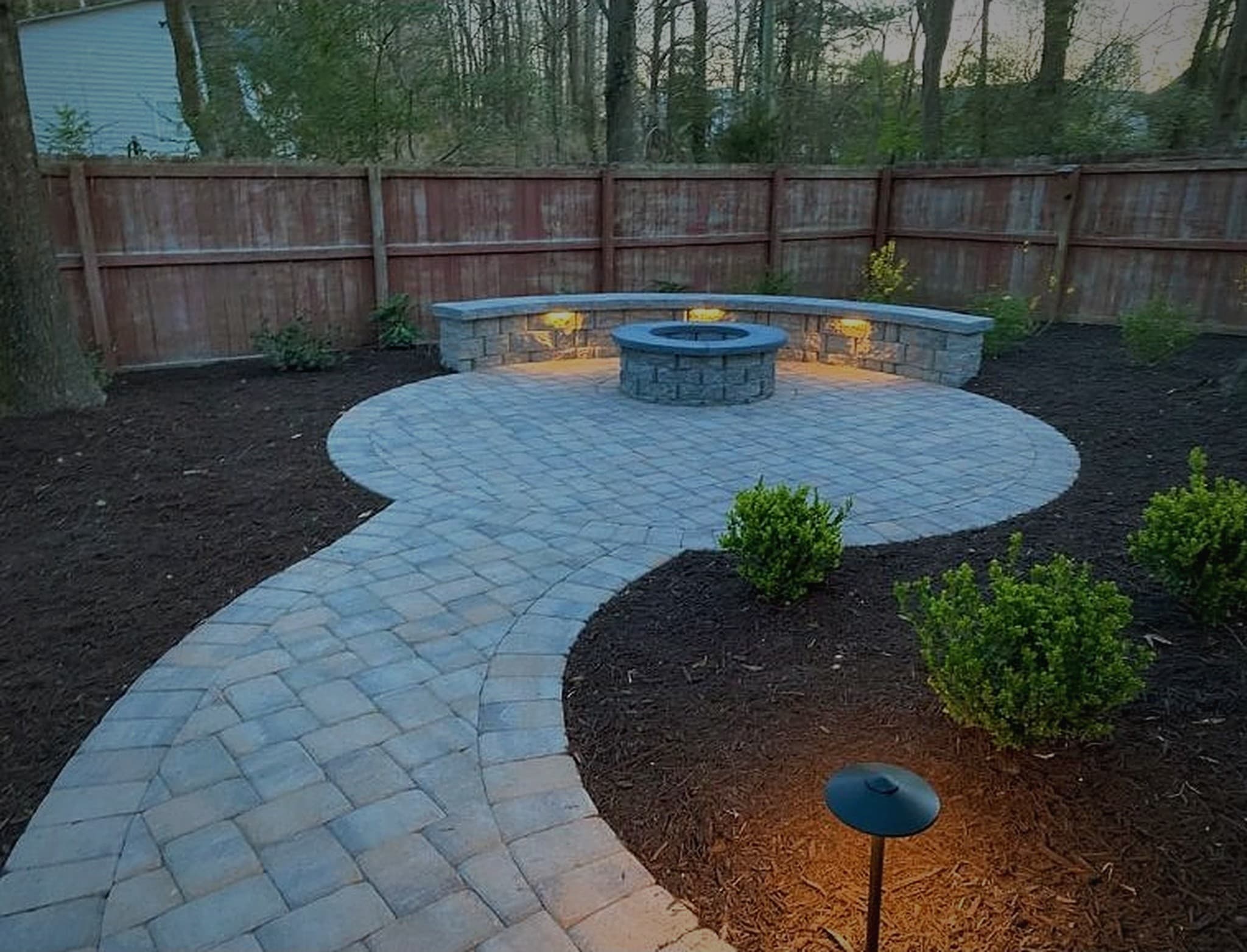

Why Paver Patios Sink, Shift, or Crack (It's Almost Always the Base)
A brand-new paver patio can look identical to one that's about to fail. The difference isn't visible on install day — it's a few inches underground, in a part of the job most homeowners never see.
The part nobody sees
Pavers themselves are just the top layer. What actually holds a patio flat and stable for decades is what's underneath: a properly excavated, compacted base of crushed stone (usually several inches, depending on soil and use — more under a driveway than a garden path), then a thin bedding layer of sand, then the pavers, then compacted joint sand to lock everything together.
Skip or shortcut any layer of that, and the patio might look perfect for a season or two before it starts telling on itself — sinking in spots, pavers rocking underfoot, edges creeping outward.
What proper base prep actually looks like
- Excavating deep enough — not just scraping off the grass, but removing enough soil for a real base layer, adjusted for how the area will be used and what the existing soil is like.
- Compacting in lifts. Base material gets compacted in layers with a plate compactor, not dumped in all at once and compacted once at the top. A base that's compacted properly resists settling; one that isn't will settle unevenly over time as it gets rained on and driven/walked over.
- Proper edge restraint. Pavers spread outward under load if the edges aren't held in place with restraint (or a mortared border) — that's what causes gaps to open up along the perimeter over time.
- Grading the base for drainage, not just the surface — water needs somewhere to go underneath the pavers, or it undermines the base from below.
Red flags when getting quotes
If a quote seems unusually low compared to others, ask specifically how many inches of base material they're using and how it's being compacted. A patio quoted without excavation depth or compaction mentioned at all is a patio where that step is being rushed — and it's the one step you can't fix later without pulling everything up.
How long a properly-built patio should last
A paver patio built on a correctly prepped base should hold up for decades with basically zero movement — periodic joint sand top-off and the occasional pressure wash is normal maintenance, not sinking or shifting. If pavers are rocking, sinking, or you're seeing gaps open along the edges within the first couple years, that's a base problem, not a "pavers wearing out" problem.
We build the base the same way regardless of whether it's a small walkway or a full outdoor living space — it's the one part of the job that determines whether you're happy with it in year one or year ten. Get a quote and we'll walk you through exactly what your site needs.
Have a project like this?
Tell us what's going on and we'll take a look — walkthroughs and quotes are free.
Get a Free Quote