
Landscaping
Landscape Design & Install
From a blank slate to a full design-build install — grading, sod, planting beds, irrigation, drainage, and lighting — planned on paper first so there are no surprises in the yard.
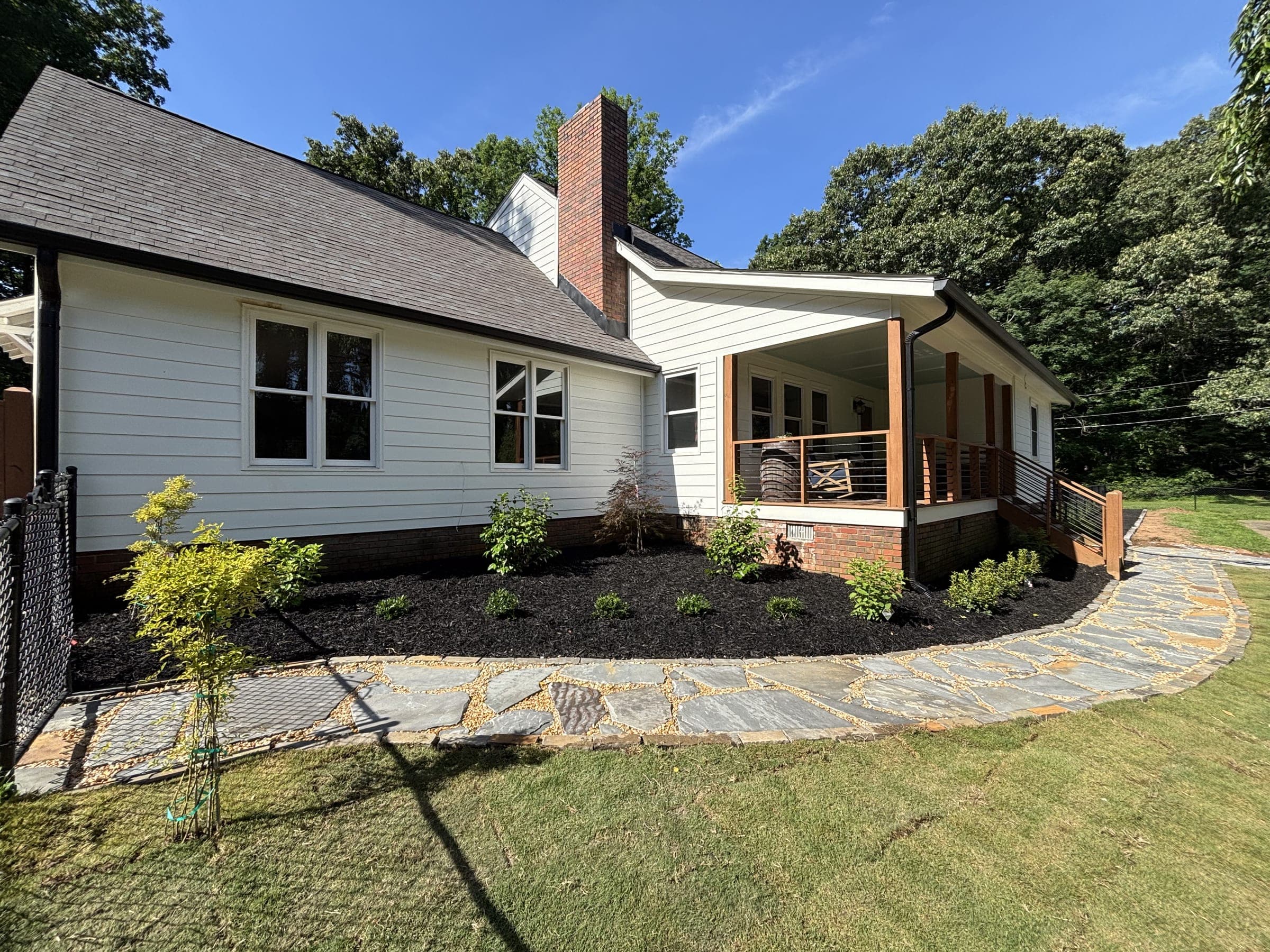
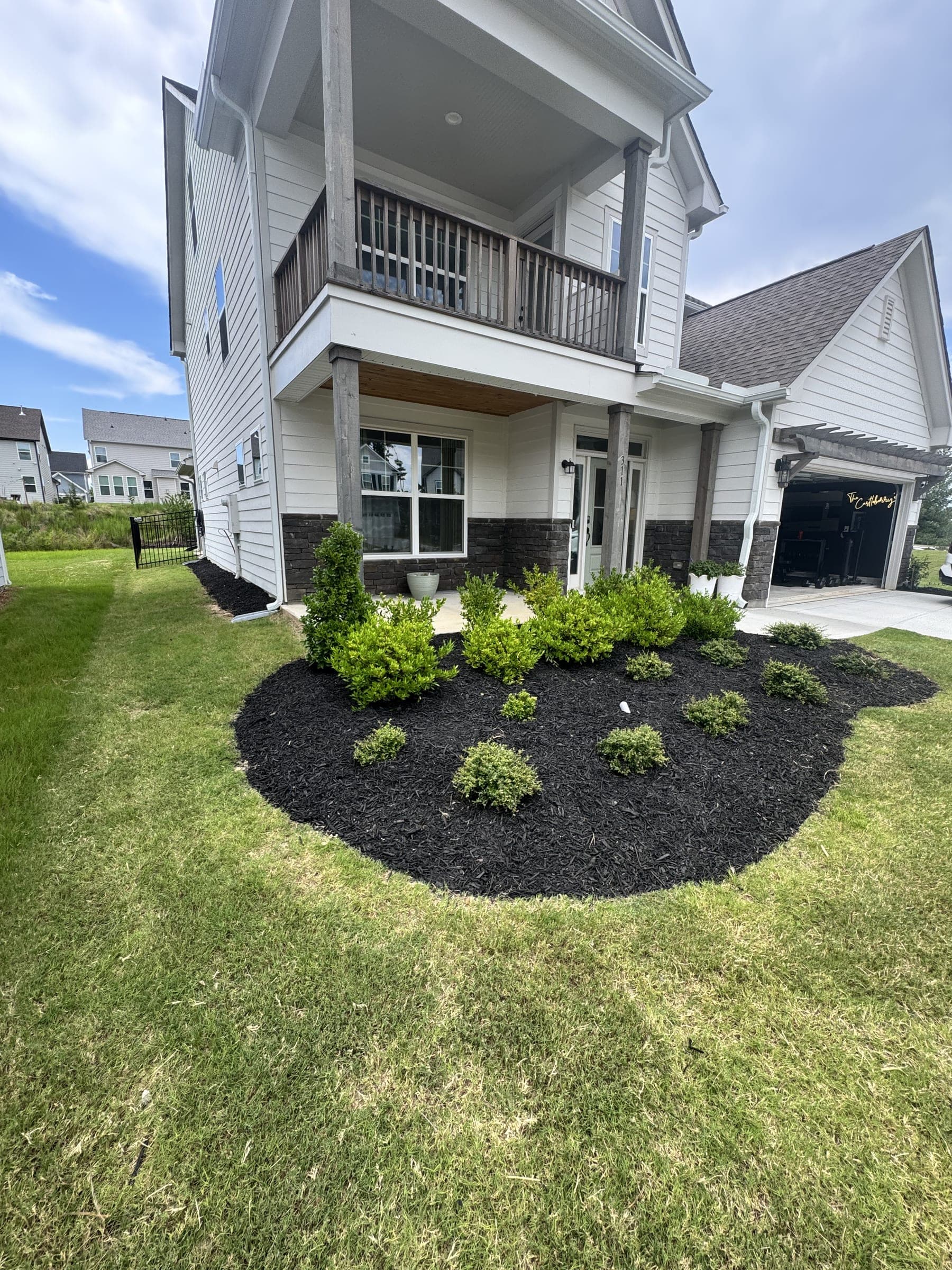
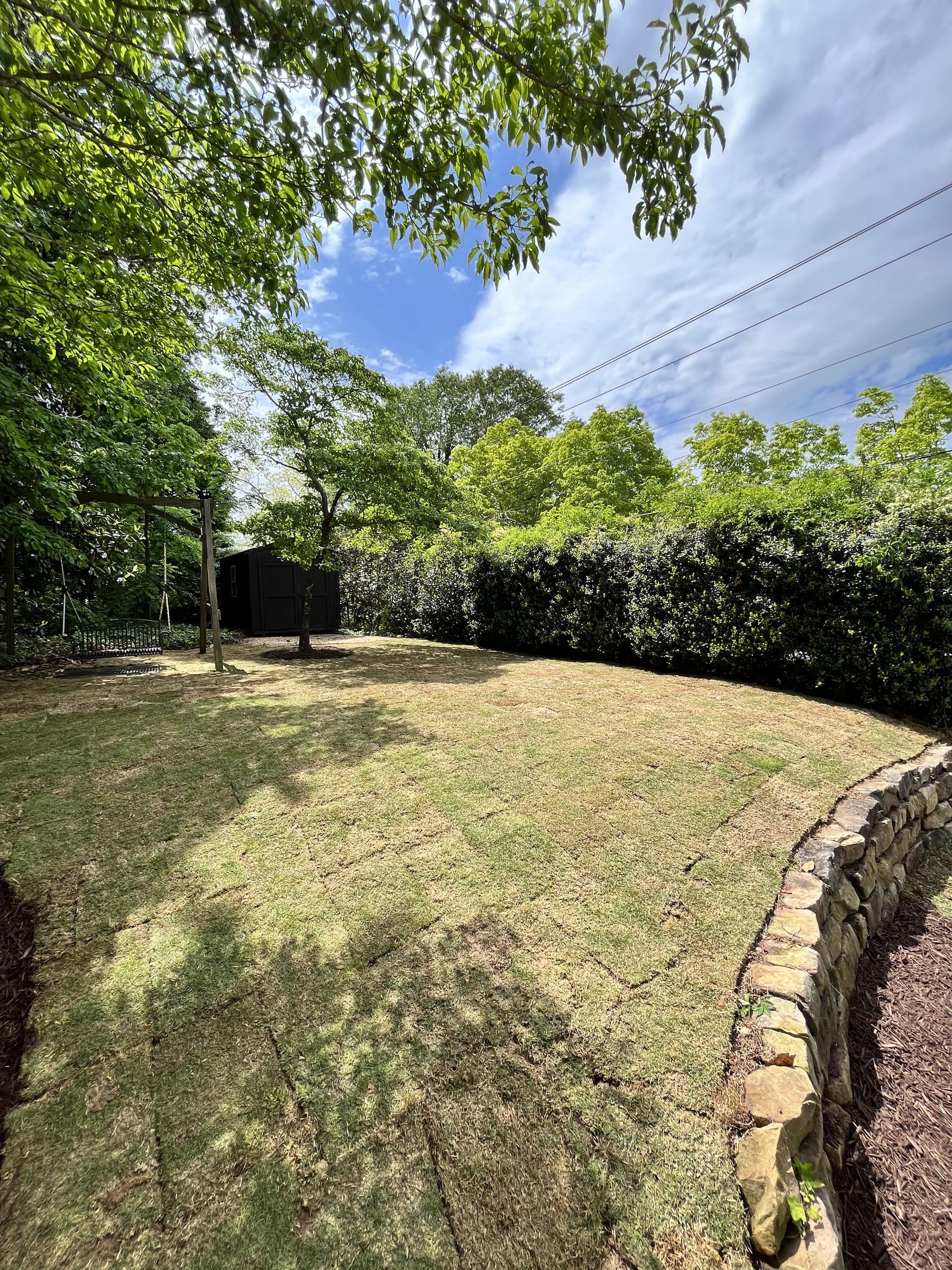
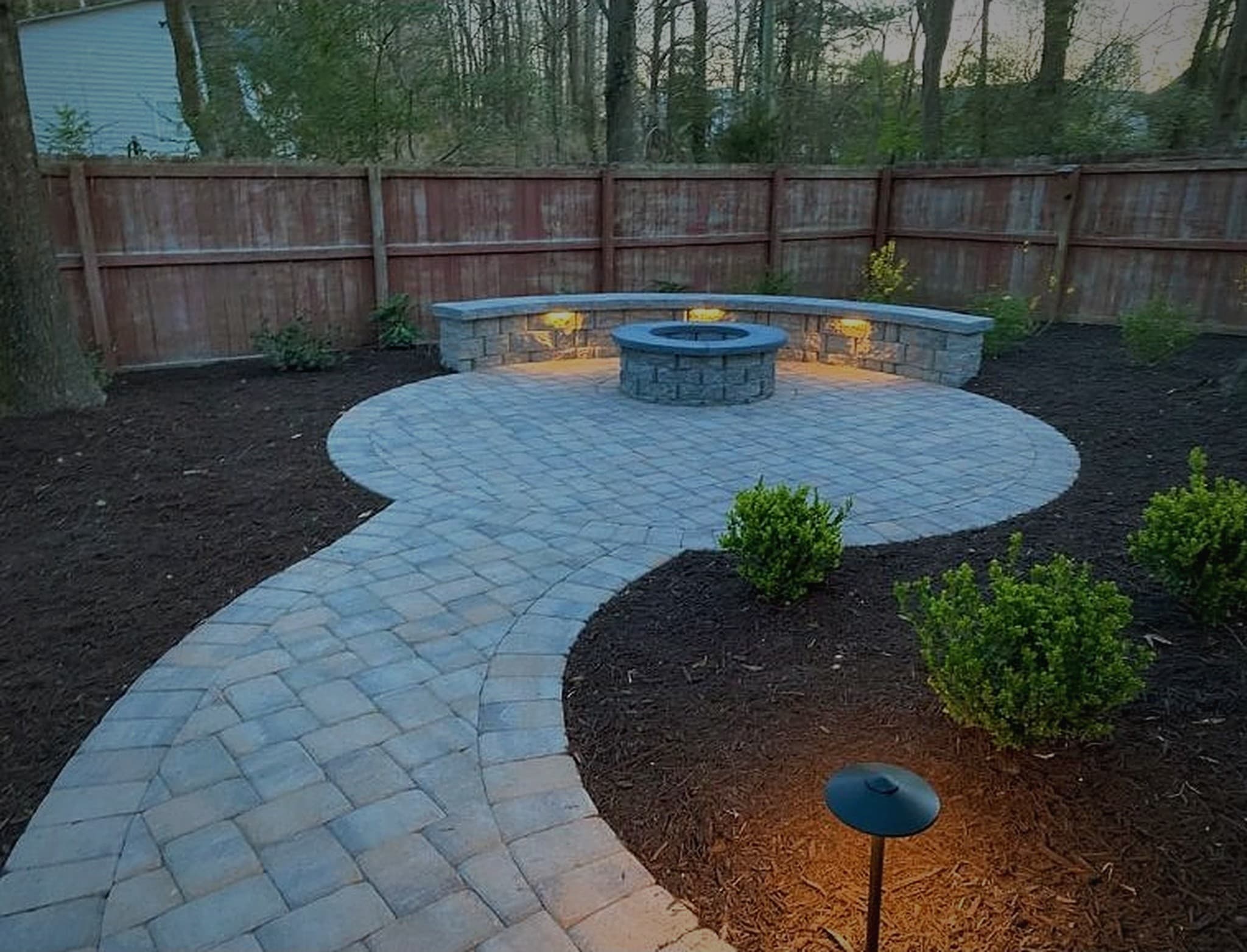
Recent landscaping work. See more of our work
Most landscape problems in North Georgia trace back to one thing: the ground underneath. This region sits on dense red clay that compacts hard, drains slowly, and shifts with every wet-dry cycle. A landscape that ignores that — sod laid over compacted subsoil, beds that pond after every storm, plants picked for looks instead of the actual sun exposure — looks fine for a season and then starts failing. Grading, drainage, and soil prep aren't the exciting part of a landscape install, but they're the part that decides whether everything planted on top of them survives the next five years.
We design on paper before anyone touches a shovel. For anything bigger than a bed refresh, that means a real walkthrough to read how water actually moves across the property — not just where it's supposed to go by the grading plan, but where it visibly pools, where the downspouts dump, where the low corner of the yard collects runoff from the neighbors. Bigger projects get a 3D concept so you can see the sod lines, bed shapes, and plant layout before we commit to it, instead of trying to picture it from a verbal description.
From there it's sequencing: grading and drainage first, irrigation and lighting sleeves before sod goes down, planting beds shaped and edged, then sod or seed last so it's not getting torn up by equipment traffic. Skipping steps or doing them out of order is the most common reason a landscape install looks great at handoff and rough a year later.
What's included
- Custom 3D design concepts before any digging starts
- Sod installation (zoysia, Bermuda, fescue) and full yard renovations
- Planting beds, mulch, and seasonal color
- Drainage correction & French drains for Georgia clay soil
- Landscape lighting and irrigation
Our landscaping process
- 01
Read the water first
Before design starts, we walk the yard during or right after rain if we can — or ask you where it pools — so drainage gets fixed at the cause instead of guessed at from a dry-day walkthrough.
- 02
Grade and rough in utilities
Grading corrections, French drains, and irrigation/lighting sleeves go in before anything green does. This is the step that's invisible in the finished yard and the one that determines whether it holds up.
- 03
Shape beds and set hardscape edges
Planting beds get cut, edged, and amended. Any paver or steel edging goes in now, while there's still equipment access without driving across finished lawn.
- 04
Plant, then sod or seed last
Trees and shrubs go in first so root balls aren't crossing finished turf. Sod or seed is the last thing installed, so it isn't the surface equipment and foot traffic are working on top of.
- 05
Walk it and set a watering plan
We walk the finished yard with you and leave you with a specific watering schedule for the first few weeks — new sod and beds fail more often from wrong watering than from anything we installed.
North Georgia considerations
- Red clay compacts easily and drains slowly — grading and soil prep matter more here than in sandier soil further south, especially before sod or planting beds go in.
- Summer humidity and afternoon thunderstorms mean drainage has to handle sudden, heavy volume, not just steady rain — a French drain sized for a light rain event backs up the first time a real storm hits.
- The zoysia/Bermuda/fescue decision should be based on your yard's actual sun exposure across the day and across seasons, not just on what's cheapest to install or what a neighbor has.
- Lake Lanier-area humidity pushes fungal pressure on turf and beds higher than drier parts of the state — plant spacing and airflow matter, not just plant selection.
Good fit if…
- A yard that floods, stays soggy, or has a dead low spot no matter how much sod gets replaced
- New construction or a full renovation where the yard is currently a blank slate
- Sod that's thinning out because it was never matched to the yard's actual sun and shade
- Wanting to see the design in 3D before committing to a layout, not just a verbal description
Materials: Sod, plants, mulch, and stone sourced through Stovall, The Rock Yard, and Luxury Landscape Supply — the same local suppliers North Georgia landscapers have used for years.
Landscaping FAQs
Why does my yard flood or stay soggy after it rains?
Most North Georgia yards sit on dense red clay that barely drains. Water pools instead of soaking in, especially where grading pushes it toward the house or a low corner of the lot. We fix it at the source — regrading, French drains, or catch basins tied into a discharge point — instead of just adding more sod on top of the problem.
What's the difference between zoysia, Bermuda, and fescue sod?
Zoysia and Bermuda are warm-season grasses that thrive in Georgia summer heat and go dormant (tan, not dead) in winter — zoysia handles shade better, Bermuda handles full sun and heavy traffic better. Fescue is cool-season, stays green through winter, but struggles in July/August heat and thins out over time in full sun. We'll tell you which fits your yard's actual sun exposure, not just what's cheapest to install.
When is the best time to install new sod in North Georgia?
Warm-season sod (zoysia, Bermuda) goes down best in late spring through summer while it's actively growing. Fescue is the opposite — early fall is ideal so it establishes before summer heat stresses it. Installing at the wrong time doesn't ruin the lawn, but it means more watering and slower establishment.
Do I need a French drain, or will regrading alone fix my drainage?
Depends on where the water's coming from. If it's surface water running the wrong direction across the yard, regrading alone can solve it. If water's coming from a specific source — a downspout, a neighbor's runoff, a naturally low spot with nowhere for surface water to go — you need a French drain or catch basin to actually move it somewhere. We diagnose which one you have before quoting either.
How much does landscape design & install typically cost?
It varies enormously depending on scope — a bed refresh and a full yard renovation with grading, irrigation, and sod aren't the same category of project. We don't publish flat pricing because a blind per-square-foot number doesn't account for your yard's actual grading, drainage, and access. You'll get a clear, itemized quote after we walk the property.
Do you handle irrigation as part of a landscape install?
Yes — irrigation sleeves and zones get planned and roughed in during the grading phase, before sod goes down, so the system isn't retrofitted around a finished lawn later.
How long does a full yard renovation take?
A full renovation — grading, drainage, beds, irrigation, and sod — typically runs 1–3 weeks depending on yard size and how much drainage correction is involved. Weather is the biggest variable since grading and sod work both depend on dry ground.