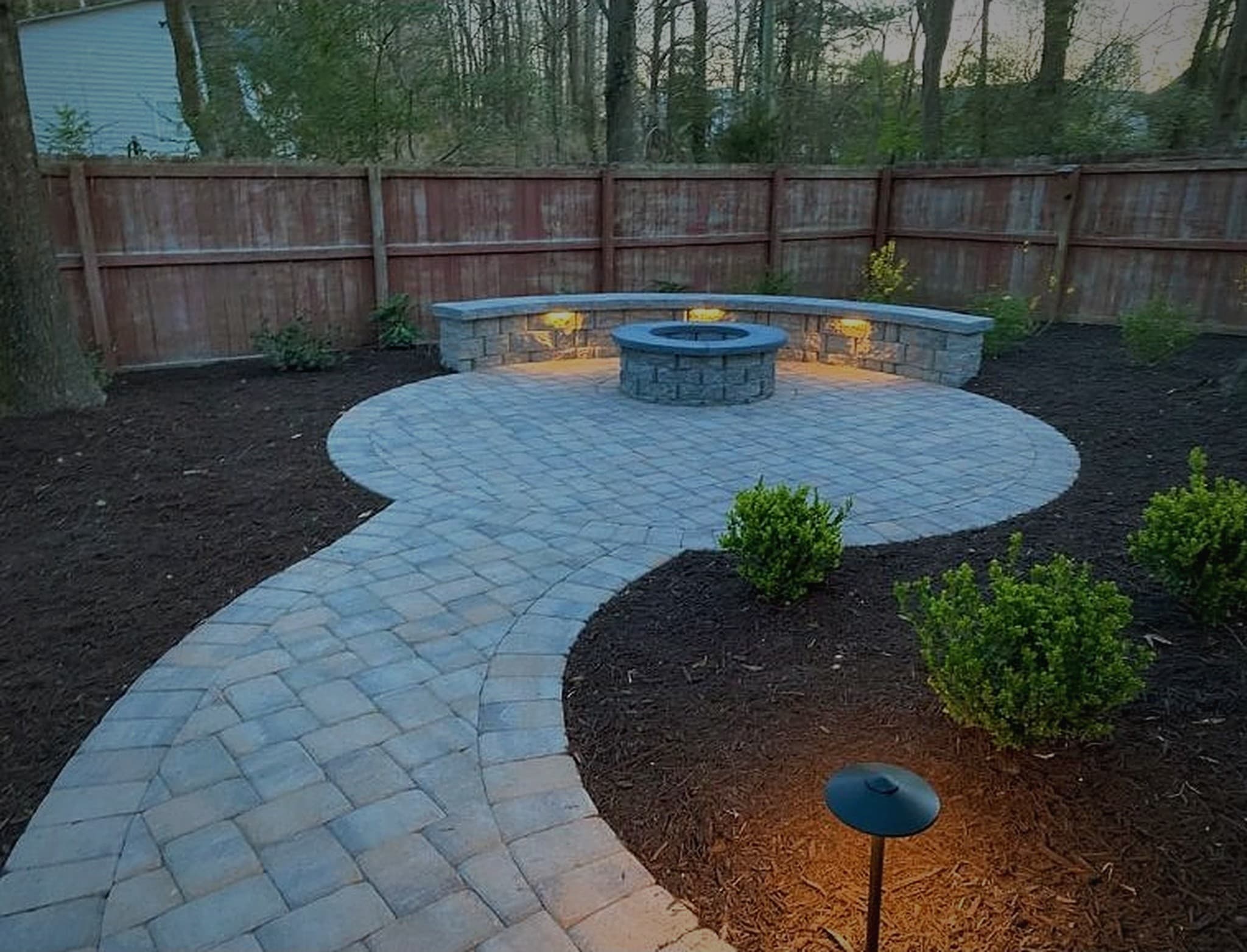

Paver Patios
Paver Patios, Walkways & Driveways
Paver patios, walkways, driveways, steps, seat walls, and fire pits — built on a properly compacted base so they stay flat and drain correctly on North Georgia clay.
A paver project is unforgiving about shortcuts in a way landscaping isn't — a thin planting bed can be corrected later, but a patio laid on inadequate base is a full tear-out to fix. North Georgia's clay soil makes base prep and drainage the two things that separate a patio that's still flat and solid in ten years from one that's sinking, heaving, or collecting water within two.
We build the invisible part first: excavation to the right depth, several inches of properly compacted crushed stone base, hidden edge restraints, and a surface sloped to shed water away from the house. Pavers go down last. It's slower and less satisfying to watch than laying the visible surface, but it's the entire reason a patio is still flat five years later instead of sunken at the edges.
Patios, walkways, and driveways have the same basic recipe but different loads. A patio carries furniture and foot traffic; a walkway needs a firm, even surface and drainage; a driveway carries vehicles, so the base has to be built deeper and stronger than it would be for a patio. We size the base for what the surface will actually carry.
What's included
- Paver & natural stone patios and walkways
- Paver driveways and driveway aprons
- Fire pits, seat walls, and outdoor kitchen bases
- Steps, edging, and flagstone or slate work
- Repair and re-lay of sinking or shifted pavers
Our paver patios process
- 01
Excavate to depth
We excavate deeper than the finished surface requires. The base layer underneath the pavers or stone carries the load, not the pavers themselves, and driveways need a deeper base than patios.
- 02
Compact a real base
Crushed stone goes in and is compacted in lifts, not dumped and compacted once, with the surface sloped away from the house. This step alone determines whether the project is still flat in five years.
- 03
Set edge restraints
Hidden edge restraints go in before the field pavers do, so the whole patio, walkway, or driveway is locked in place instead of relying on the pavers' own weight.
- 04
Lay pavers or set stone, then compact and sand
Pavers are laid to pattern, cut at the edges, compacted into the bedding sand, and the joints filled. This is the visible step, and the fastest part of the job.
- 05
Walk it for level and drainage
We check the finished surface for proper slope away from structures before calling it done. A patio that looks flat to the eye can still hold water in a low spot if the slope is off by a fraction.
North Georgia considerations
- Patios near the house must slope away from the foundation. Grading and drainage planning matter as much as the design itself.
- Freeze-thaw cycles here are milder than further north but still real, so base depth and compaction still matter for frost heave.
- Fire pits, seat walls, and outdoor kitchens are best planned into the patio layout from the start, so the base, drainage, and any gas or electrical rough-in happen together.
- Heavy summer thunderstorms dump water quickly, so the surface and the ground around it have to move water off fast instead of letting it soak in and soften the base.
Good fit if…
- A backyard that needs a real outdoor living space: a patio, seat wall, or fire pit, not just a slab
- An existing paver patio that's sinking, shifting, or has weeds coming up through the joints
- A defined walkway or steps between parts of the yard that currently means walking through mud or grass
- A driveway or apron you want to look like stonework instead of plain concrete
Materials: Pavers, bedding stone, and natural stone sourced through Stovall, The Rock Yard, and Luxury Landscape Supply.
Paver Patios FAQs
Why do some paver patios sink or shift after a year or two?
Almost always base prep: not enough compacted gravel base, or skipping it to save time. A patio that's going to last needs several inches of properly compacted crushed stone base and bedding sand before the first paver goes down. It's the least visible part of the job and the part that determines whether it's still flat in five years.
How long does a paver patio installation take?
A typical residential patio (300–600 sq ft) runs 3–7 working days depending on excavation depth, drainage work, and weather. Grading and base compaction take longer than laying the actual pavers.
Can you build a fire pit or outdoor kitchen into a paver patio?
Yes. Fire pits, seat walls, and outdoor kitchen structures are usually planned into the patio layout from the start, so the base, drainage, and any gas or electrical rough-in happen together instead of being retrofitted into a finished patio later.
Are pavers a good choice for a driveway?
They can be, if the base is built for vehicle loads. A paver driveway needs a deeper, more heavily compacted base than a patio, and solid edge restraints so the surface doesn't spread under tires. We'll tell you honestly whether pavers or poured concrete makes more sense for your driveway and budget.
Do you match existing pavers or stone for a patio extension?
We'll try, but exact matches aren't always possible. Paver colors and stone batches change over time, and manufacturers discontinue patterns. We'll show you the closest current match before starting so there are no surprises.
Can you fix a paver patio that has sunk or shifted?
Often, yes. If the problem is localized, we can lift the pavers, rebuild the base underneath, and re-lay them. If the whole patio was built on inadequate base, a full rebuild is usually the honest answer. We'll look at it and tell you which it is.