
Concrete
Concrete Install
Driveways, walkways, patios, and slabs — formed, reinforced, and finished correctly, with proper base prep so it doesn't crack or heave.
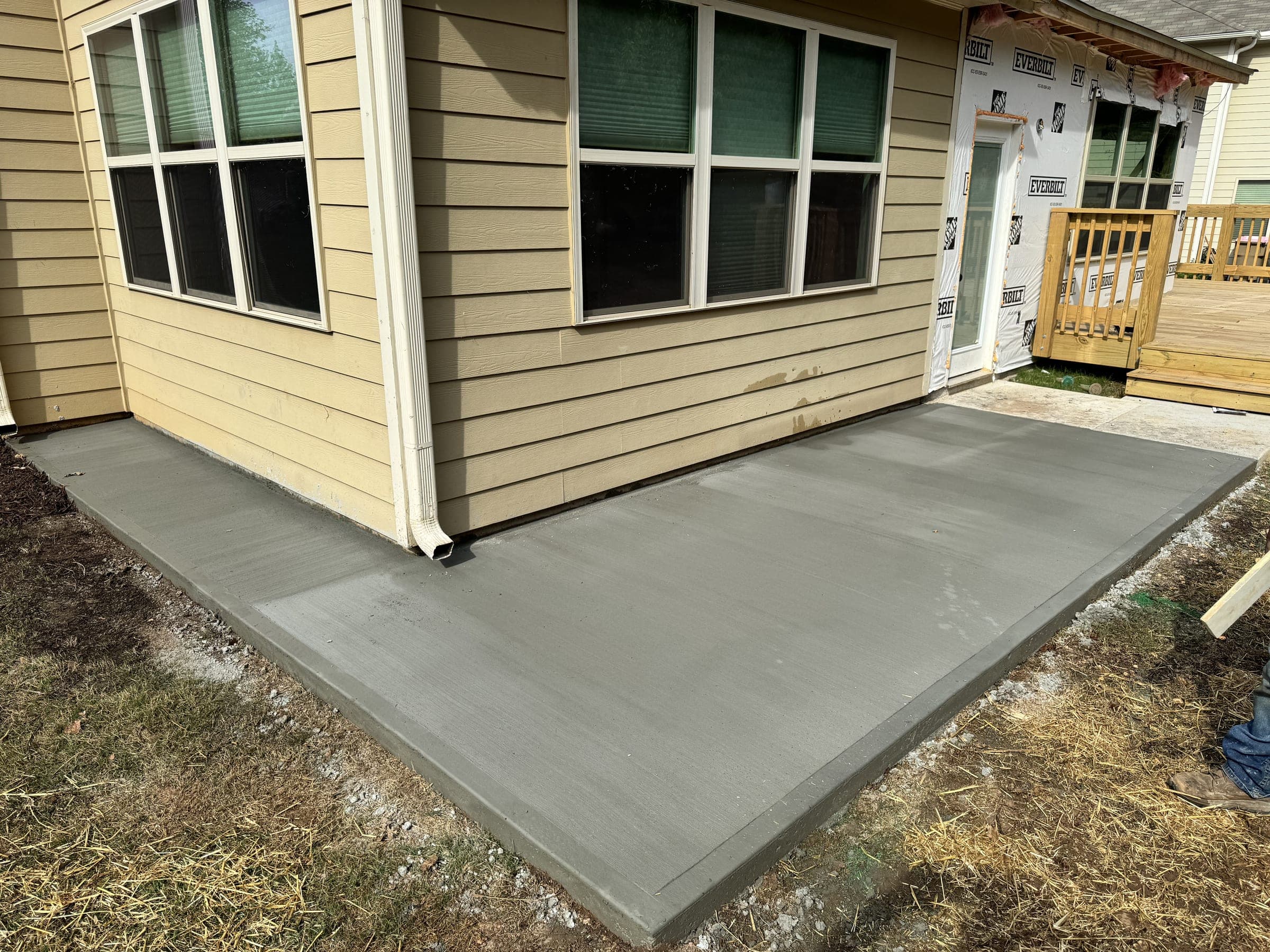
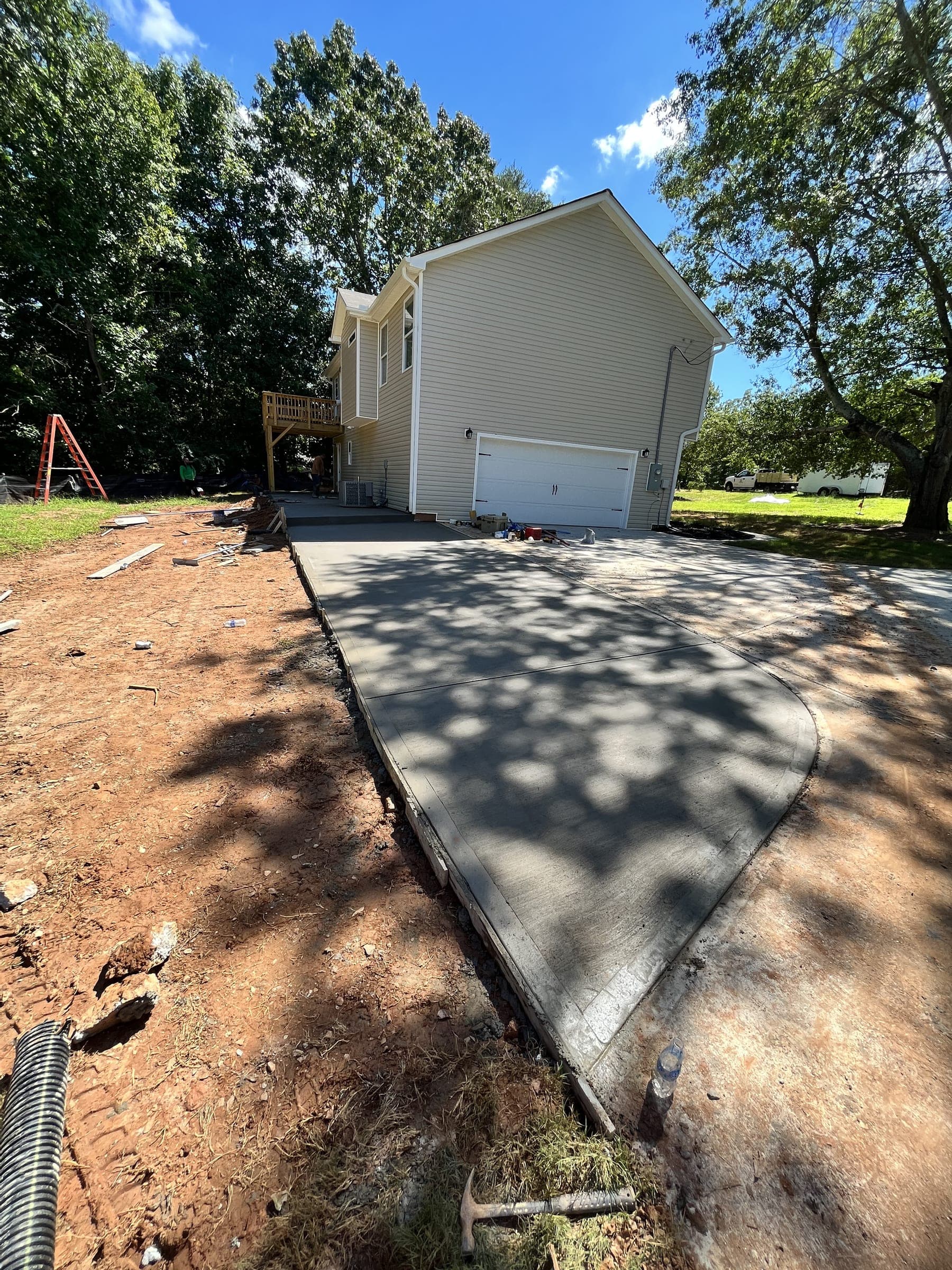
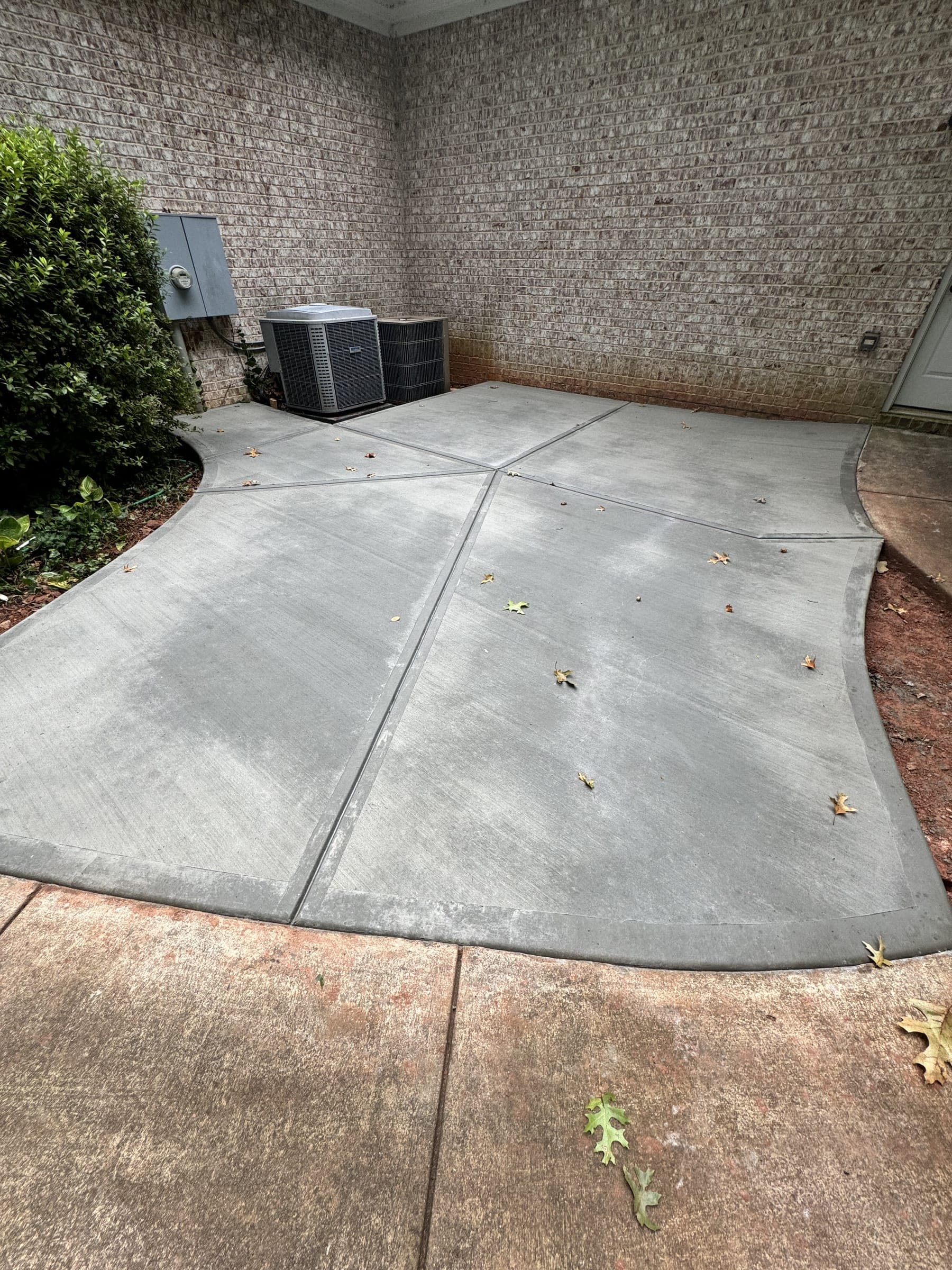
Recent concrete work. See more of our work
Concrete gets treated like a commodity — get three prices, take the cheapest — but the material itself is rarely what determines whether a driveway or slab lasts 20 years or starts cracking and heaving in three. What matters is base prep, thickness, reinforcement, and control joints placed where cracks should happen instead of where they will happen anyway.
Georgia's red clay expands and contracts more than sandier soils as it wets and dries, which puts real movement stress on anything poured directly on top of unprepared subgrade. A compacted gravel base isolates the slab from that movement. Skip it to save a step, and the slab is directly at the mercy of whatever the clay underneath does every time it rains and dries out again.
Reinforcement (rebar or wire mesh) and control joints work together, not separately — reinforcement holds a slab together if it does crack, control joints tell it where to crack in a straight, planned line instead of a random one across the middle of your driveway. Skipping either one doesn't always show up immediately, but it shows up eventually.
What's included
- Driveways & extensions
- Sidewalks & walkways
- Patios & pads (sheds, AC units, dumpster pads)
- Stamped & broom-finish options
Our concrete process
- 01
Excavate and grade
Excavate to the right depth and grade the subgrade to slope water away from the house or structure — this is decided before forms go up, not adjusted after.
- 02
Compact base and set forms
A compacted gravel base isolates the slab from clay movement underneath. Forms get set to the correct thickness and slope, checked before any concrete arrives.
- 03
Reinforce
Rebar or wire mesh goes in based on the slab's use — a driveway carrying vehicle weight needs different reinforcement than a walkway or patio.
- 04
Pour and finish
Concrete is placed, screeded level, and finished (broom or stamped) while it's workable — timing here affects the final texture and durability of the surface.
- 05
Cut control joints and cure
Control joints get cut within hours of finishing, while the concrete can still be scored cleanly — this is what makes cracks happen in straight planned lines instead of randomly across the slab.
North Georgia considerations
- Georgia red clay expands and contracts more with moisture than sandier soils — proper base prep isolates the slab from that movement instead of letting the slab absorb the stress directly.
- Heavy summer downpours mean grading and slope need to move water away from the slab and any structure fast, not just eventually.
- Humidity and temperature swings between a hot, wet summer and occasional winter freezes both put real stress on concrete — control joint spacing and depth need to account for both, not just one season.
- For driveways, the subgrade under high-traffic areas (where tires actually track) sees more repeated load than the edges — base compaction consistency across the whole slab matters, not just the average.
Good fit if…
- A cracked, heaving, or crumbling driveway, walkway, or slab that's beyond a patch fix
- A new pad for a shed, AC unit, generator, or dumpster enclosure
- Extending an existing driveway for extra parking
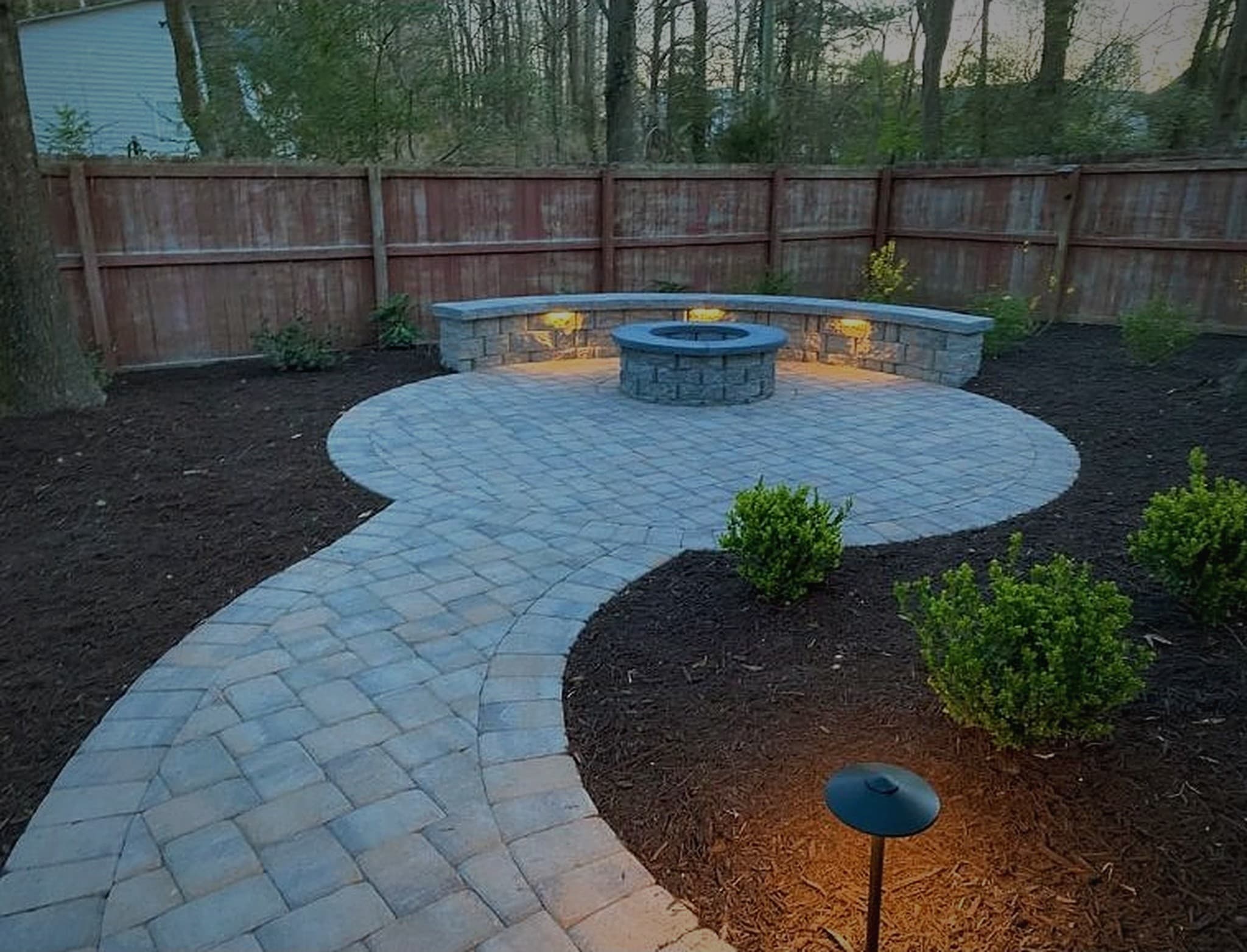
- Wanting a stamped, custom-look patio or entry without paying full paver pricing
Materials: Concrete and base materials sourced locally through Stovall and The Rock Yard.
Concrete FAQs
Why does concrete crack, and is it always a problem?
Some hairline cracking is normal — concrete shrinks slightly as it cures, which is why we cut control joints to make cracks happen in straight, planned lines instead of randomly. Real problems come from skipping a compacted gravel base, pouring too thin, or not reinforcing a slab that needs it — that's what causes cracking and heaving, not just age.
How long before I can drive or walk on new concrete?
Foot traffic is generally fine after about 24–48 hours. For a driveway, wait at least 7 days before regular vehicle traffic — concrete reaches roughly 70% of its strength in a week, even though full cure takes closer to a month.
Stamped vs. broom finish — what's the actual difference?
Broom finish is standard, slip-resistant, and the most affordable — the right call for most driveways and walkways. Stamped concrete is patterned and colored to look like stone, brick, or slate before it fully cures — it costs more but gives a patio or entryway a custom look without paying paver prices.
Do you remove and replace old concrete, or pour over it?
In almost every case we remove and replace. Pouring new concrete over old creates a weak bond and telegraphs any existing cracks up through the new surface within a season or two — it looks like a shortcut because it is one.
What causes a driveway to heave or lift unevenly?
Usually inconsistent base compaction or soil movement underneath — clay soil that wasn't properly compacted or graded before the pour shifts unevenly as it wets and dries, taking sections of the slab with it. Thickness and reinforcement matter too, but base prep is the most common root cause.
How thick should a driveway slab be?
A standard residential driveway is typically 4 inches thick, but areas that see heavier vehicles (a truck, an RV pad) usually call for more thickness and reinforcement. We size it to what's actually going to drive on it, not a one-size number.
Can you match new concrete to existing color or finish?
For broom finish, closely — same mix and finishing technique gets you very close. For stamped or colored concrete, exact matches are harder since color batches and stamp patterns change over time. We'll show you options before pouring so you know what to expect.